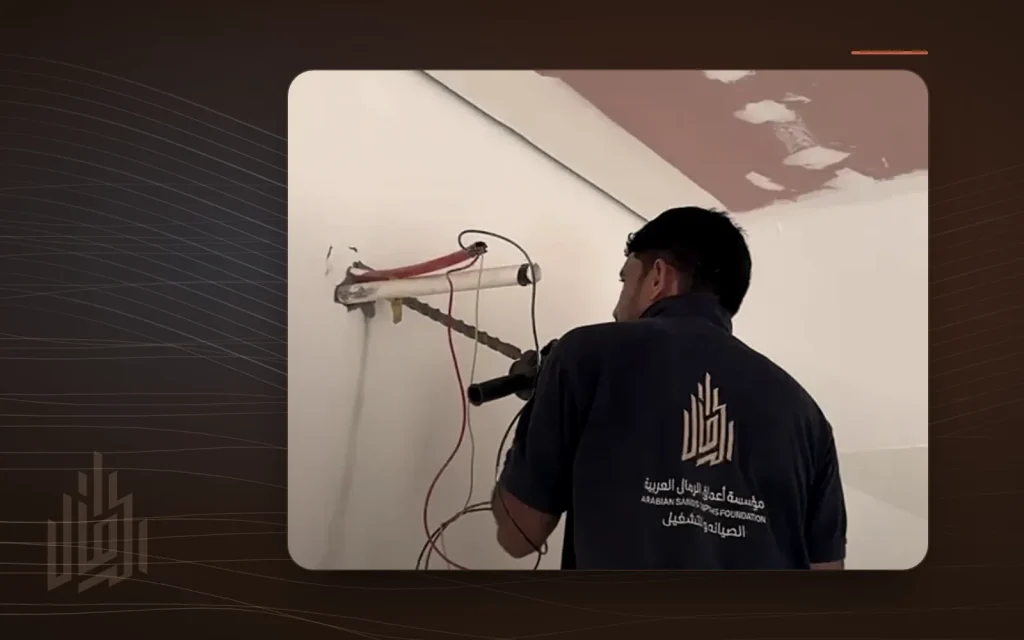
In short: Copper piping is the refrigerant line that connects the indoor and outdoor units. Across the Eastern Province we run it in American copper sized to the unit capacity, with thermal insulation, a drain line and the control cable, and pressure-test it before closing.
The quality of the copper and the way it is run decide how well the AC performs for years. A weak joint, a sharp bend or missing insulation means gas leaks, condensation on the ceiling or weak cooling that is hard to trace later.
The best time to run copper is before plaster and gypsum, when the pipes can be hidden in walls and ceilings and ready points are left for installing the units after finishing.
What the piping includes
We hand over a line ready for installation, complete with:
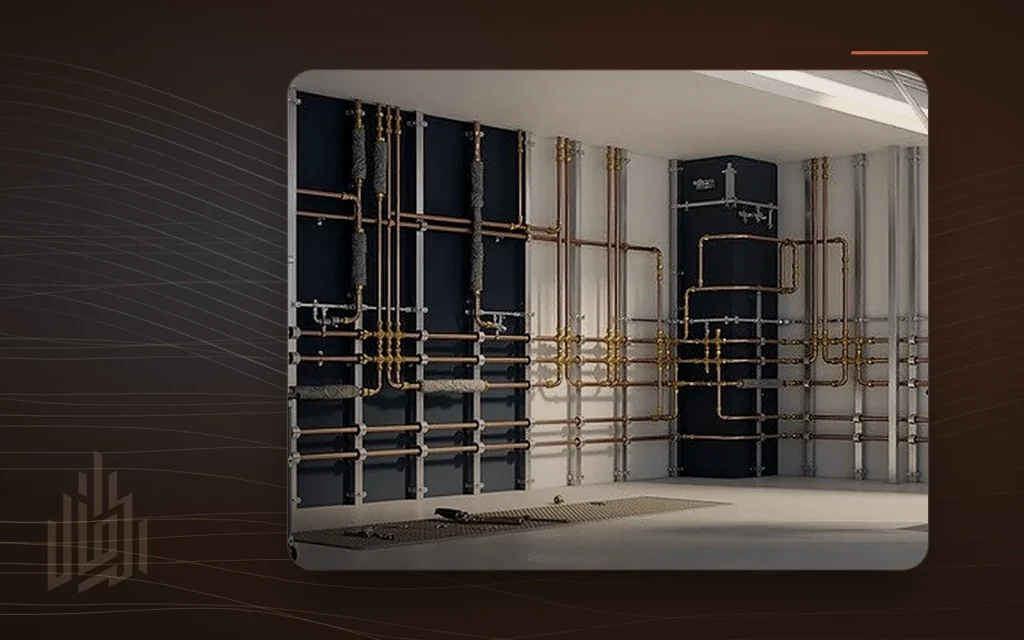
- American copper pipes: liquid and gas lines in the right diameters for each unit.
- Thermal insulation: full insulation to prevent condensation and cooling loss.
- Drain line: a drain pipe sloped correctly to the outlet.
- Electrical connection: power and control cable between the units.
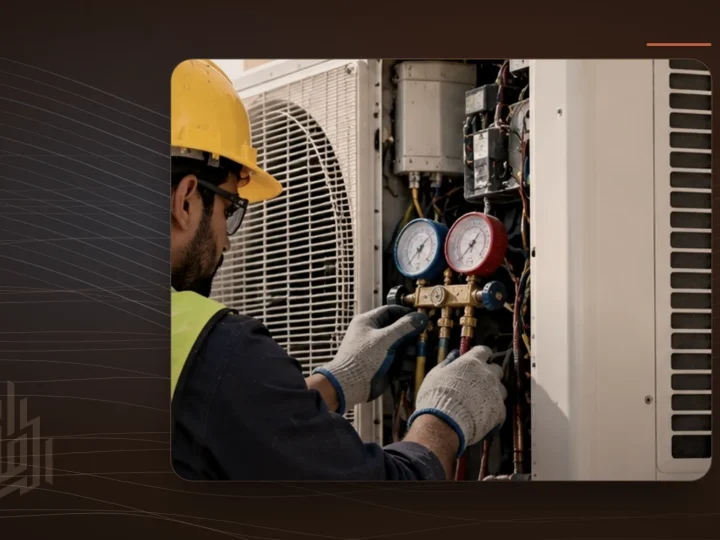
- Pressure test: with nitrogen before closing, to prove the joints are leak-free.
- Surface runs for existing buildings: inside neat trunking where concealing is not possible.
Copper piping stages
- Plan the routes Indoor and outdoor unit positions and the shortest safe route.
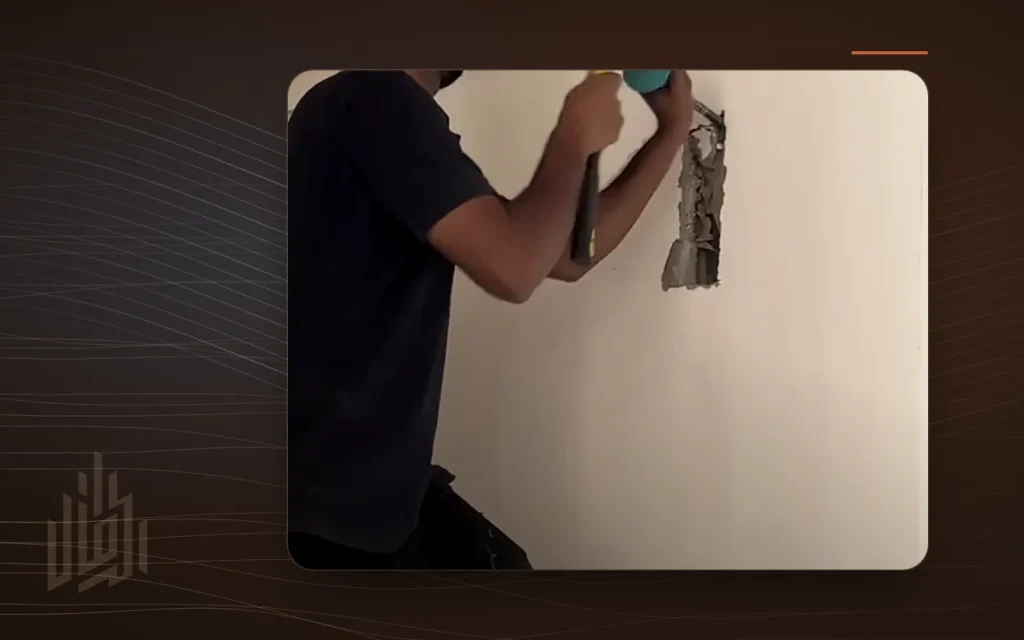
- Prepare Chase the walls or ceiling and core-drill the openings.
- Run and braze Bend with proper tools and braze clean joints.
- Insulate and drain Insulate the pipes and run the drain with the right slope.
- Pressure test With nitrogen, recording the result before closing.
- Close and hand over Cap the ends and label the points for later installation.
Why American copper?
American copper with the right wall thickness handles the pressures of modern refrigerants, resists cracking from thermal expansion in the Eastern Province summer, and brazes cleanly without leaks.
- Diameters that match the manufacturer’s recommendation for each capacity
- Bent with proper tools instead of by hand, which narrows the pipe
- Continuous insulation with no gaps at the joints
What sets the cost?
We price piping after the site survey; the total depends on:
| Factor | Effect |
|---|---|
| Total length | Charged per metre for each unit. |
| Unit capacity | Larger capacities need larger diameters. |
| Route type | Concealed before finishing, or surface-run in trunking. |
| Openings and heights | Concrete core-drilling and work on façades. |
Why run your copper with ASD?
- American copper In the right diameters.
- Clear proposal Lengths and items before we start.
- Pressure tested Before closing.
- Same team installs the units On the same rough-in.
Where we run copper piping
We serve projects across the Eastern Province – including Al-Ahsa (Al Mubarraz and Al Hofuf), Dammam, Al Khobar, Dhahran, Jubail, Ras Tanura, Abqaiq and Qatif – from our office in Al Mubarraz, Al-Ahsa.
More details: common mistakes, tips and what you get
Common mistakes we avoid
The mistakes we see most often, and how we handle them:
- Thin or non-standard copper: cracks or leaks under pressure and heat.
- Incomplete insulation: causes condensation and stains on ceilings and walls.
- Sharp bends: narrow the pipe and restrict refrigerant flow.
- Closing without a pressure test: any leak after finishing means breaking walls.
- A drain without slope: water backs up and drips from the indoor unit.
Tips before you book
- Run the piping before plaster and gypsum whenever possible.
- Fix the AC and furniture positions early so points do not have to move.
- Leave a drain point close to every unit.
- Ask for a photo of the pressure test before closing.
- Photograph the copper routes to make future maintenance easier.
What you get
- Insulated copper lines ready for installation
- A correctly sloped drain line for every unit
- The pressure-test result before closing
- Labelled points and photos of the routes
FAQ
How is AC copper piping priced in the Eastern Province?
By total length, unit capacity, route type and openings – we send the proposal after the survey.
Does the price include insulation and drain?
Yes – thermal insulation, the drain line and the pressure test are included.
Can you run copper in a finished, lived-in home?
Yes, as a surface run in neat trunking, or by cutting limited chases and refinishing.
Do you pipe central and VRF systems?
Yes, including refnets and branch kits for VRF/VRV and ducted systems according to the system design.
When is the best time to pipe a new building?
After the walls are built and before plaster and gypsum, coordinated with the electrical rough-in.